If a prosecutor has offered you a plea in abeyance, you are probably feeling two things at once: relief that there may be a path to dismissal, and worry about signing something you do not fully understand. Both feelings make sense. A plea in abeyance in Utah can be one of the best outcomes in a criminal case, but it comes with real conditions and real risks. Here is a plain explanation of how it works, so you know what you are agreeing to and what comes next.
What Does It Mean to Plea in Abeyance?
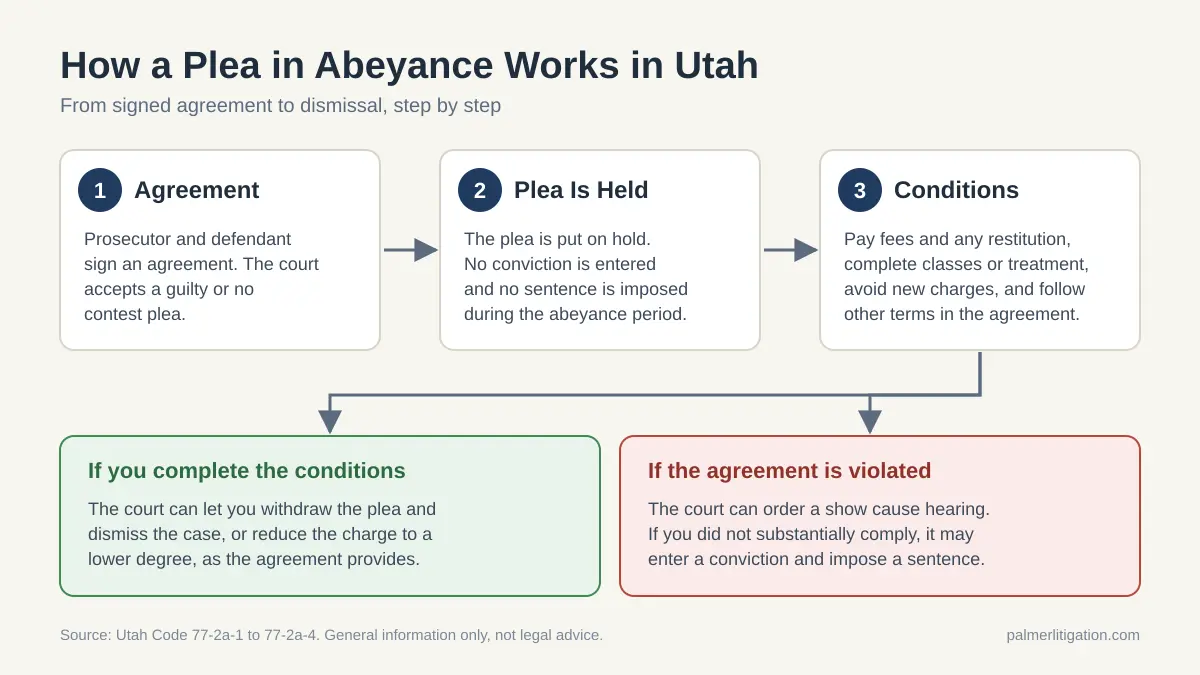
A plea in abeyance means you enter a guilty or no contest plea, but the court holds it instead of entering a conviction or sentence. Under Utah Code 77-2a-1, the court accepts the plea on the motion of the prosecutor and the defendant, on condition that you follow a written plea in abeyance agreement. If you complete the terms, the case can be ultimately dismissed.
In everyday language, “abeyance” means on hold. Your plea sits on hold while you show the court you can meet the conditions set in the agreement.
How a Plea in Abeyance Works Under Utah Law
Every abeyance agreement is a contract between you and the prosecutor, and the court must approve it. A typical agreement can require you to:
- Pay a plea in abeyance fee and any court surcharge
- Pay restitution to an alleged victim, if any is owed
- Complete classes, counseling, treatment, or community service
- Avoid new criminal charges during the abeyance period
- Follow other conditions that a judge could impose as probation
Utah Code 77-2a-3 allows these kinds of conditions, and the Utah courts note that you are effectively on probation while you complete them. When the court finds you have finished everything, it can allow you to withdraw your plea and dismiss the case, or reduce the offense to a lower degree, depending on what the agreement says.
How Long Does a Plea of Abeyance Last?
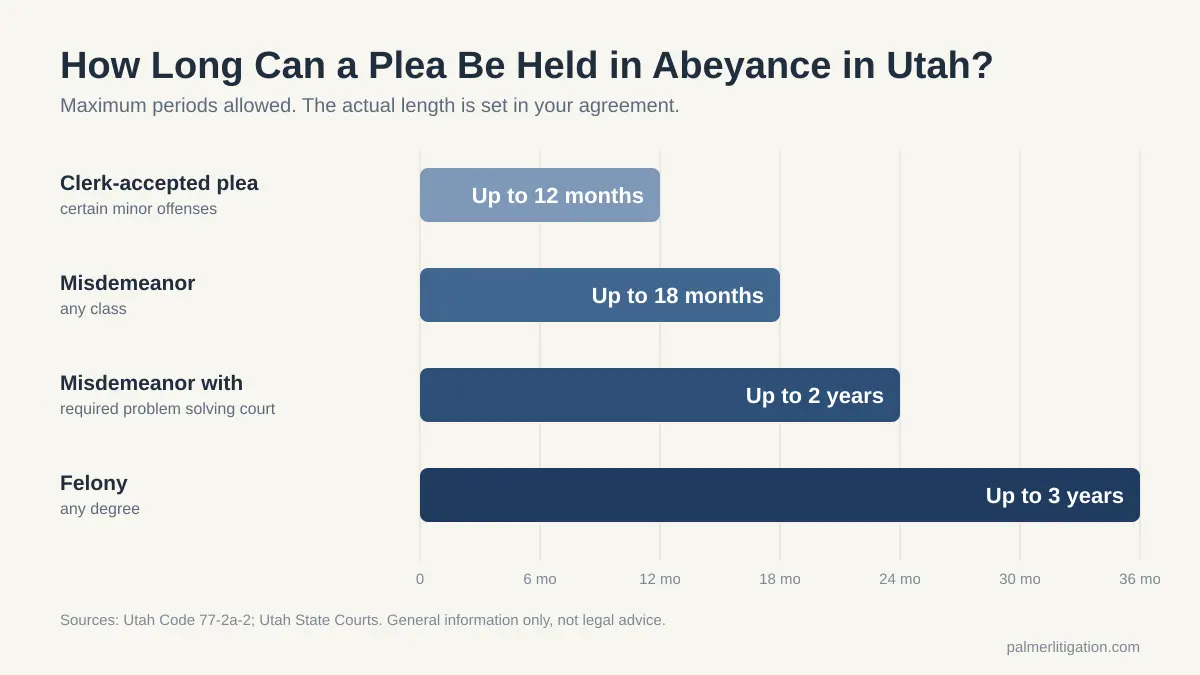
Under Utah Code 77-2a-2, a plea may not be held in abeyance longer than 18 months for any class of misdemeanor, or longer than three years for any degree of felony. A misdemeanor plea can run up to two years if the agreement requires a court-approved problem solving court. For certain minor offenses where a court clerk accepts the plea, Utah courts say the plea is held for up to one year.
Who Can Qualify for a Plea in Abeyance in Utah?
Both the prosecutor and the defendant must agree, and the judge must accept it. Pleas in abeyance are common for first time offenders facing lower-level charges, such as certain misdemeanor theft, traffic, or drug possession cases, though each case is different.
Utah law also says no plea may be held in abeyance in certain crimes, including any driving under the influence violation under Utah Code 41-6a-502 and sexual offenses against a victim under 14. If you are facing a DUI in Washington County, other strategies apply. Our St. George DUI defense attorneys can walk you through them.
Does a Plea in Abeyance Show on Your Record?
Yes, at first. While your plea is held, no judgment of conviction is entered, but the case and the plea still appear in court records and can show up on a background check. After a dismissal, the records still exist until you have them sealed. To have your records sealed, you generally need to pursue expungement separately, which is why planning ahead with a Utah criminal defense attorney matters.
What Happens If You Break a Plea in Abeyance?
If the court learns you violated the agreement, it can order you to appear and show cause why it should not find a violation. Under Utah Code 77-2a-4, after a hearing the judge may terminate the agreement if you failed to substantially comply, enter a judgment of conviction on the original charge, and impose sentence. A violation can also lead to separate prosecution for the new conduct.
This is the part people worry about most, and it is where having counsel matters. A missed payment or a late class is not always the end of the road. You have the right to be heard, to present evidence, and to have a lawyer stand beside you at that hearing.
Can I Change My Mind After Accepting a Plea Deal?
Sometimes, but the window is narrow. Utah courts explain that once a plea is accepted, you can typically withdraw it only by filing a written motion and showing the plea was not knowingly and voluntarily made. That is a high bar, so it is far better to ask questions before you sign. [CONFIRM WITH CLIENT: firm’s preferred guidance on plea withdrawal timing]
What Is the Downside of Plea Bargains?
When you enter any guilty plea, including a plea held in abeyance, you give up important constitutional rights: the right to a jury trial, the right to confront the witnesses against you, the protection against self incrimination, and most rights to appeal. Those rights exist for a reason. Before you give them up, you deserve to know whether the evidence against you was gathered lawfully, whether a Fourth Amendment search and seizure issue exists, and whether the case could be dismissed outright.
A plea in abeyance is a good tool. It should never be the default answer when the facts support a stronger defense.
Plea in Abeyance Cases in St. George and Washington County
In Southern Utah, felony and many misdemeanor cases are heard at the Fifth District Court at 206 West Tabernacle Street in St. George. Many lower-level cases start in local justice courts, including the Washington County Justice Court in St. George and the justice courts in Washington City, Hurricane, and Santa Clara. Each court and prosecutor’s office has its own practices for abeyance offers, fees, and supervision.
If you were cited while visiting the area, passing through on I-15, or recently moved here with your family, you may not know how these local courts work. That is normal, and it is exactly what we help with. You can learn more about our approach on our criminal law page or read what to expect during a criminal trial if your case may not settle.
Why Talk to a Utah Criminal Defense Attorney First
An abeyance offer is a starting point for a conversation, not a final answer. A lawyer can review whether the charge should be reduced or dismissed, negotiate fairer terms, check how the agreement may affect a professional or commercial driver license, and plan for expungement after dismissal. If you are worried about cost, our guide on how much a criminal defense attorney costs explains what to expect.
Frequently Asked Questions
What does plea held in abeyance mean?
It means the court has accepted your guilty or no contest plea but is holding it without entering a conviction or sentence. If you complete every condition in your abeyance agreement, the court can allow you to withdraw the plea and dismiss the case, or reduce the charge, based on the terms you agreed to.
What does abeyance mean in law?
In law, abeyance means a temporary pause or suspension. With a plea in abeyance, the pause applies to your conviction and sentence. Nothing is final while the abeyance period runs, which gives you the chance to earn a dismissal by meeting the court’s conditions.
Do most cases end in a plea deal?
Many criminal cases resolve through some kind of negotiated agreement rather than a jury trial. That does not mean you should accept the first offer. Every case deserves a careful look at the evidence, your rights, and whether a better result is realistic.
Is a plea in abeyance the same as an expungement?
No. A dismissal after a plea in abeyance means you were not convicted, but the court records remain. Expungement is a separate legal process to seal those records. Ask your attorney how and when you may be eligible.
Talk to Palmer Litigation About Your Case
You do not have to figure this out alone. If you have been charged in St. George, Hurricane, Washington, Santa Clara, Ivins, Cedar City, or anywhere in Southern Utah, we will listen, explain your options in plain language, and protect your rights at every step. Contact Palmer Litigation today to schedule a consultation. [CONFIRM WITH CLIENT: phone number and whether consultations are free]
This article is for general information only and is not legal advice. Reading it does not create an attorney-client relationship. Every case is different, so please speak with a licensed Utah attorney about your situation.